
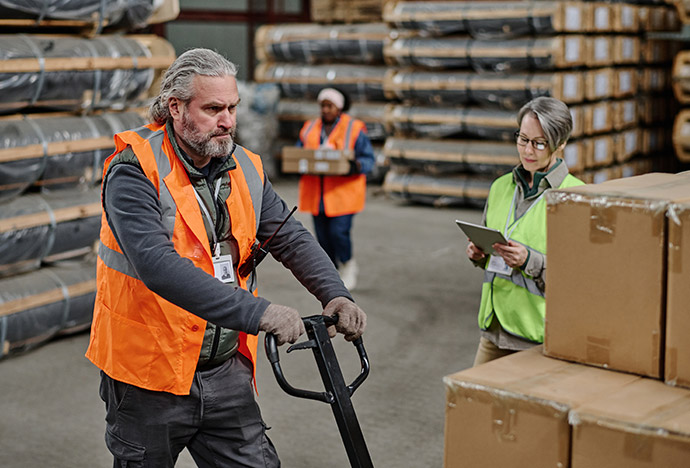
At Cold Solutions, we see crossdocking as a coordinated transfer, not simply a fast unload. Freight arrives, is verified and sometimes sorted, then moves toward a planned outbound shipment without the normal period in long-term storage. Our St. Louis warehousing page describes receiving freight, transferring product between trailers or modes, and sorting for outbound delivery. If a business is considering cross docking services in St. Louis, we would ask about both sides of the move. A destination, carrier, and handling plan should be known before speed becomes the goal.
We Start With the Freight Path
We would want to know which pallets can remain intact, which need to be separated by destination, and which orders require case-level handling. An inbound load bound for one customer is different from a mixed load feeding several outbound routes. That distinction changes the staging space, labor, scanning, and appointment sequence the operation needs. We would also ask how many loads arrive during the busiest period, not only the monthly average. An attractive plan based on a quiet day may fail on the day several trucks arrive together.
For products that need temperature control, we would ask for the shipper’s requirements at each handoff. The trailer, unloading area, temporary staging, and outgoing vehicle all matter. A short dwell does not make product-specific conditions disappear. We would identify which information the shipper provides, what condition the carrier is expected to maintain, and what questions need a food safety decision. The FDA’s sanitary transportation rule addresses equipment suitability, sanitary practices, and temperature control for covered food shipments; the applicable duties depend on the parties and goods involved.
Advance shipment information is part of the freight path. We would ask for agreed identifiers, expected quantity, destination breakdown, product handling instructions, and appointment information before arrival. If a destination code changes while a truck is en route, the change needs to reach the people assigning outbound lanes. We would rather resolve a mismatched identifier before unloading than discover it after several pallets have been distributed across routes.
We would also ask how the outbound load is built. Does the receiver accept a mixed pallet, or must each destination receive a separate pallet and label? Are cases counted by item, by lot, or by customer order? This is where an apparently simple direct transfer can become a case-sorting project. We would identify that work in the scope instead of hiding it inside the word “crossdock.” The physical format the customer expects determines the scans, labor, and final verification needed.

We Plan the Exceptions With the Normal Route
Imagine two inbound trucks assigned to one outbound route. The first arrives early, the second is delayed, and the outbound carrier checks in on time. We would discuss the available choices before this happens: hold freight under approved conditions, ship an authorized partial order, rebook the departure, or transfer to storage if that service is included. Who makes the decision? When does the customer learn about it? What does the inventory record show while the order is incomplete? This is an illustrative planning situation, not a reported Cold Solutions shipment.
We would also define what happens when the count or condition differs from the advance notice. A manifest might show 40 pallets while the physical count shows 39. One pallet may have an unreadable label or visible damage. The process should record the finding, keep questionable freight from being loaded without authorization, and identify who can resolve the discrepancy. A scan at receipt is useful, but it does not by itself settle whether an unidentified pallet belongs on a particular customer’s truck.
An outbound trailer can create its own exception. It might arrive late or lack the equipment a shipper requires. We would want the plan to identify who checks readiness, who makes the call to hold freight, and who arranges a revised appointment. Moving product faster cannot repair a mismatch between the freight’s requirements and the vehicle collecting it. Clear communication among shipper, warehouse, and carrier protects the handoff.
We Measure the Whole Transfer
We would compare elapsed time from confirmed inbound arrival to confirmed outbound departure, not merely the minutes a pallet spends in one staging area. A shipment can leave the warehouse quickly and still miss its destination because a carrier appointment was poorly coordinated. We would ask which timestamps are available, how discrepancies are reported, and whether the agreed order was actually loaded. The record should connect incoming identifiers to the outgoing shipment at the level the customer needs.
The cost comparison also needs the full workflow. Receiving, sortation, pallet rebuilding, relabeling, temporary holding, and outbound handling may be different activities. A simple pallet transfer should not be priced or evaluated as though it were a complex multi-destination sort. We would invite the customer to share representative patterns so a proposed scope reflects the actual work. A claim of savings based only on reduced storage misses labor, transport, and exceptions.
The same discipline applies to scheduling. We would ask whether the supplier can provide reliable arrival notices and whether the outbound carrier can reserve a practical window. A plan with two perfect appointments may look excellent on paper while failing every week in practice. We would build in the actual variability and agree when an early or late arrival changes the assignment. That gives the dock team a clear rule and gives the customer a realistic expectation.
We would examine how much handling is necessary. Keeping an intact pallet together can reduce touches; breaking it down may be essential to create accurate route-ready orders. Neither is universally better. The right method follows the destination plan and product constraints. We would also discuss whether freight that cannot leave on schedule can move into an appropriate storage workflow, and how its status changes when that happens.
We Would Prove the Route Before Expanding It
A pilot route can show whether the data and appointments are sound. We would agree in advance on the expected count, destinations, handling conditions, required scans, carrier window, and exception contact. After the move, we would compare the plan with actual receipts, holds, outbound confirmation, and delay reasons. If an error stems from missing advance data, the shipper and warehouse should fix that feed before increasing volume. If the route’s timing is unrealistic, the carrier schedule needs attention.
We would choose a pilot that resembles the recurring route, including its busiest realistic day. Testing only a single intact pallet would teach us little about a future mixed load going to six destinations. We would review what was staged, what left, what remained, and what each party believed the final status to be. If their records disagree, the discrepancy should be reconciled before more freight is added to the process.
Our St. Louis logistics overview presents warehousing and transportation services together. We would still define which parts of a customer’s route are within the agreed scope. The strongest crossdock plan is one that can answer a simple question at any moment: where is this freight, which outbound move is it assigned to, and who decides what happens if the schedule changes?
Frequently Asked Questions
Is Crossdocking Useful If a Business Already Uses Storage?
It can be. We would look for incoming goods with known outbound destinations while leaving replenishment inventory in an appropriate storage flow. The two processes can serve different orders.
What Information Helps Us Plan a Crossdock?
We would ask for shipment identifiers, expected quantities, destinations, appointment windows, product conditions, and any required lot or seal details. The exact format belongs in the operating agreement.
What Happens If the Outbound Carrier Is Late?
We would follow the agreed staging or storage plan, protect the product under its required conditions, update the departure record, and notify the party responsible for the revised appointment.

Reach out to us at Cold Solutions online, or call call 816-429-9330. When refrigeration goes down, everything stops. Food. Product. Business. It’s stressful. We get that. That’s why we keep it simple. You call.
We show up. We figure it out. No long speeches. No confusing explanations. Just straight answers and solid repairs. Whether it’s a walk-in cooler acting up or a system that just won’t hold temp, we’ve seen it before. And we know how to fix it. If something’s not working the way it should, don’t wait. Call us or send a message. We’ll take it from there.







Leave A Comment
You must be logged in to post a comment.